Exploring the Definition and Nuance of Regenerative Agriculture at Wolfe’s Neck Center and Beyond
Written by Julie Bobyock
Regenerative agriculture encompasses practices that create healthier ecosystems, increase farm resiliency, and improve soil health–as opposed to practices that, for example, may extract nutrients from soil or use fertilizers that contaminate the environment. But regenerative agriculture strategies might appear differently depending on the specific farm or ecosystem type.
Just like ecosystems all over the world–from tropical forests to deserts, grasslands, and tundras–no two agriculture or farm systems function the same. Because there are multiple factors that affect the characteristics of farmland (such as geography, climate, ecosystem type, soil, and crop type), regenerative agriculture does not have an official definition; one practice that works on one farm may not work on another.
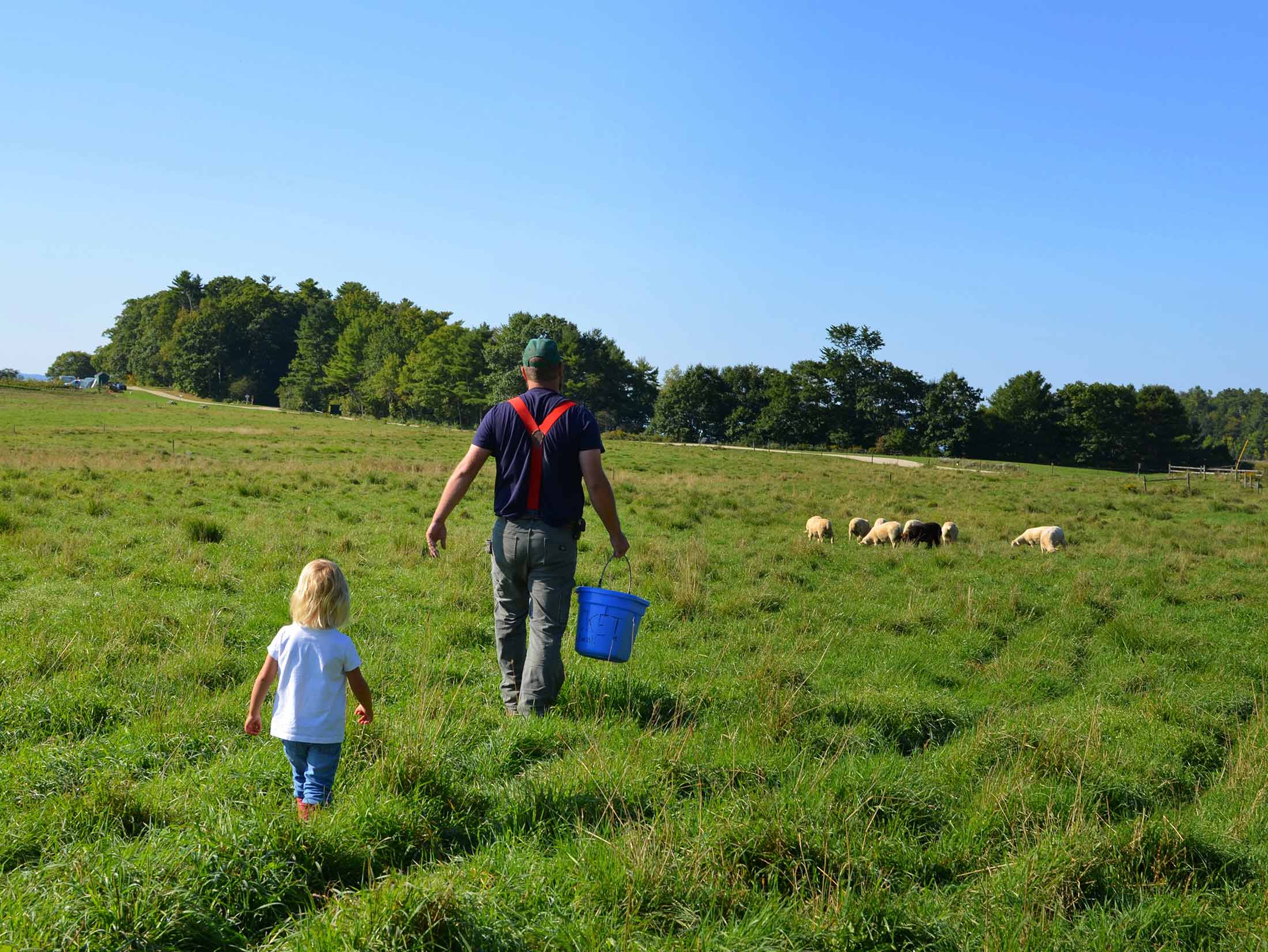
For instance, regenerative agriculture could look very different on an almond farm in California that has different soil, climate, and crops compared to a pasture-based dairy farm in Maine. With different purposes (i.e., growing crops vs. raising cows), the farmers use unique strategies to keep the environment healthy. The dairy farm may practice rotational grazing to prevent soil and grass degradation, while the almond farm may use recycled wastewater for irrigation to reduce water stress. Even though they’re using different practices, both aim to build resilience and minimize environmental impact.
Regenerative agriculture–built on Indigenous understandings, skills and philosophies that have been passed down over generations–stregthens both farmland and its surrounding ecosystems. It can help sustain the use of farmland to prevent additional land clearing, keep carbon stored in the soil (as opposed to releasing it as carbon dioxide), and create an agroecosystem that is more resilient to climate change. But without standardized requirements or a definition, it can often be hard to measure and implement.
“Regenerative agriculture is largely born from the negative outcomes of conventional and industrial agriculture practices,” said Cortlandt Myerson, Founder of Why Regenerative. “Pesticide use, monocropping, tilling…these are some examples of conventional practices that degrade soil health and contaminate nearby ecosystems. Regenerative agriculture works to reverse this damage, or make sure it doesn’t happen in the first place.”
Why is it difficult to measure regenerative agriculture?
Unlike use of the term “organic,” which is strictly regulated by the USDA, regenerative agriculture is based on principles. In the late 1970s and early 1980s, when the idea of regenerative agriculture emerged from the organic movement, the focus was on reciprocal relationships with the land that mimicked natural processes. Early proponents like Robert Rodale wrote that by reducing inputs and cultivating biologically healthy soils, regenerative agriculture offers “a high level of built-in economic and biological stability,” “has minimal to no impact on the environment beyond the farm or field boundaries,” and “provides for the productive contribution of increasingly large numbers of people during a transition to minimal reliance on non-renewable resources.”
Today, although the potential benefits of this sort of farming are becoming increasingly apparent to everyone from small farms to large food companies, the lack of numerical guidelines or a clear definition make measuring the output of regenerative agriculture challenging.
Another difficulty is that important aspects of regenerative agriculture, like soil carbon, microbes, and nutrients, are notoriously hard to measure. For instance, just one teaspoon of soil can contain billions of microbes. These factors contributing to soil diversity can also change depending on the time, day or season–so piecing together accurate and helpful soil metrics for a multiple-acre farmland can take an incredible amount of time and effort. That’s why Wolfe’s Neck Center for Agriculture & the Environment is supporting efforts to advance the science and evidence behind the benefits of regenerative agriculture; scientific results are essential for farmers to adopt changes.
As ecosystem function is context-specific and closely tied to geography, one technique that works well in, say, the Tropics might not work well–or even at all–in New England. This adds to the difficulty of measuring and defining regenerative agriculture, as each farm has a unique array of effective strategies and results. That’s why Wolfe’s Neck Center partners with regional farms to figure out how to best adopt regenerative agriculture systems that work specifically for them.
What does regenerative agriculture look like? What does it look like at Wolfe’s Neck Center for Agriculture & the Environment?
Many regenerative agriculture strategies focus on improving soil health, but the impact of these practices extends to protecting and improving all aspects of farmland and the surrounding environment.
For instance, to limit contamination of nearby ecosystems, a farmer may avoid chemical fertilizers and add nutrients to the soil in other ways–like adding nitrogen-fixing legumes to their farmland. This simultaneously reduces environmental impact and benefits soil health. Rotational grazing allows grass and soil to regenerate to prevent soil degradation and erosion. Growing different kinds of crops advances farm resiliency by spreading the risk of crop failure across diverse crops and increasing biodiversity in the ecosystem.
Here at Wolfe’s Neck, we’ve adopted a systems approach to regenerative agriculture that is holistic, place-specific, and associated with improved agricultural, ecological, social, health, and economic outcomes. And we help farmers in the Northeast do the same.
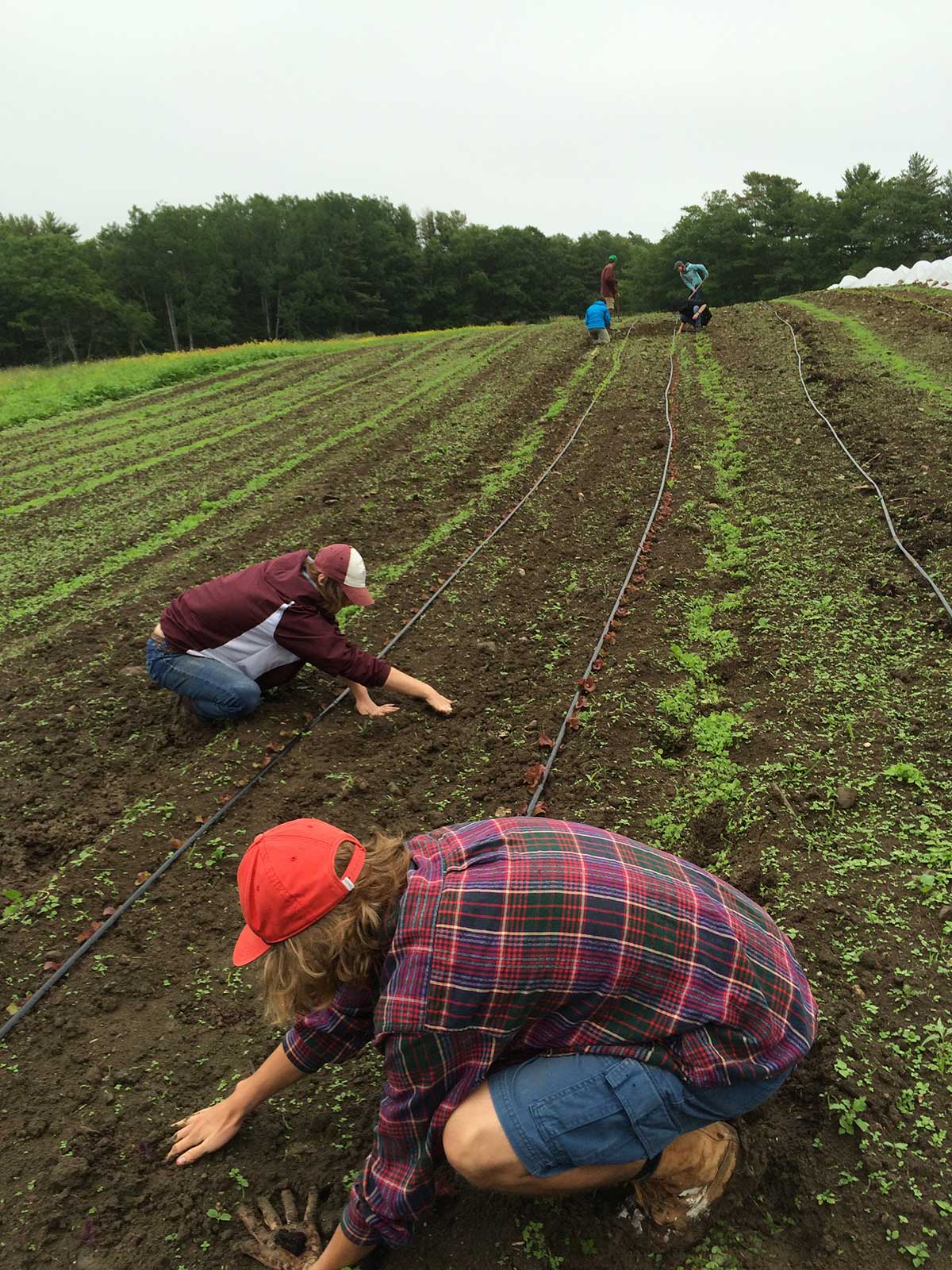
Demonstrating the potential and effectiveness of regenerative agriculture strategies is a critical component to helping them be adopted. Wolfe’s Neck Center’s fruit and vegetable production operations allow us to demonstrate a number of core regenerative agriculture practices in our greenhouses and small orchards. By showing the results of our strategies like crop rotation, integrated pest management, cover cropping and more, we visibly display the effectiveness of regenerative agriculture to farmers and the public.
Our Northeast Farmers Fund is designed to support adoption of regenerative agricultural practices by local producers. By contracting with regional farms, we help farmers and managers see what regenerative agriculture could look like for them. For example, we might work with a local apple orchard to help strategize how to reduce waste from unsold apples or add specific nutrients into the soil without chemical fertilizers. Our experts also help identify and combat financial challenges that often come with large-scale changes to farm practices.
“The Northeast Farmers Fund really works to meet farmers where they are at when it comes to incorporating regenerative practices,” explained Maddie Delaney, Senior Manager of Market Development at Wolfe’s Neck.
“Our work with individual farmers can be in the field supporting soil health, figuring out what specific farming strategies may be beneficial to them, or helping them receive an organic or regenerative certification. It often focuses on market development as well, ensuring that their products are profitable. You could do all the good work in the world, but if that work isn’t communicated or doesn’t have a viable market opportunity, then the money to continue the good work isn’t there. We want to make regenerative agriculture a practical reality that people want to and are able to choose.”