Why We Cover Crop
By Tom Prohl, Fruit & Vegetable Production Manager
Last weekend’s 2 inches of rainfall was an excellent reminder of why we cover crop our fruit and vegetable fields through the winter. Heavy rainfall on open ground has the potential to create damaging erosion. This erosion contributes to nutrient and topsoil loss in our farming system. Additionally, it can be detrimental for field soil and nutrients to run off into local watersheds. That’s why in preparation for the winter, we plant cover crops on the plots with more highly erodible sloping soils.
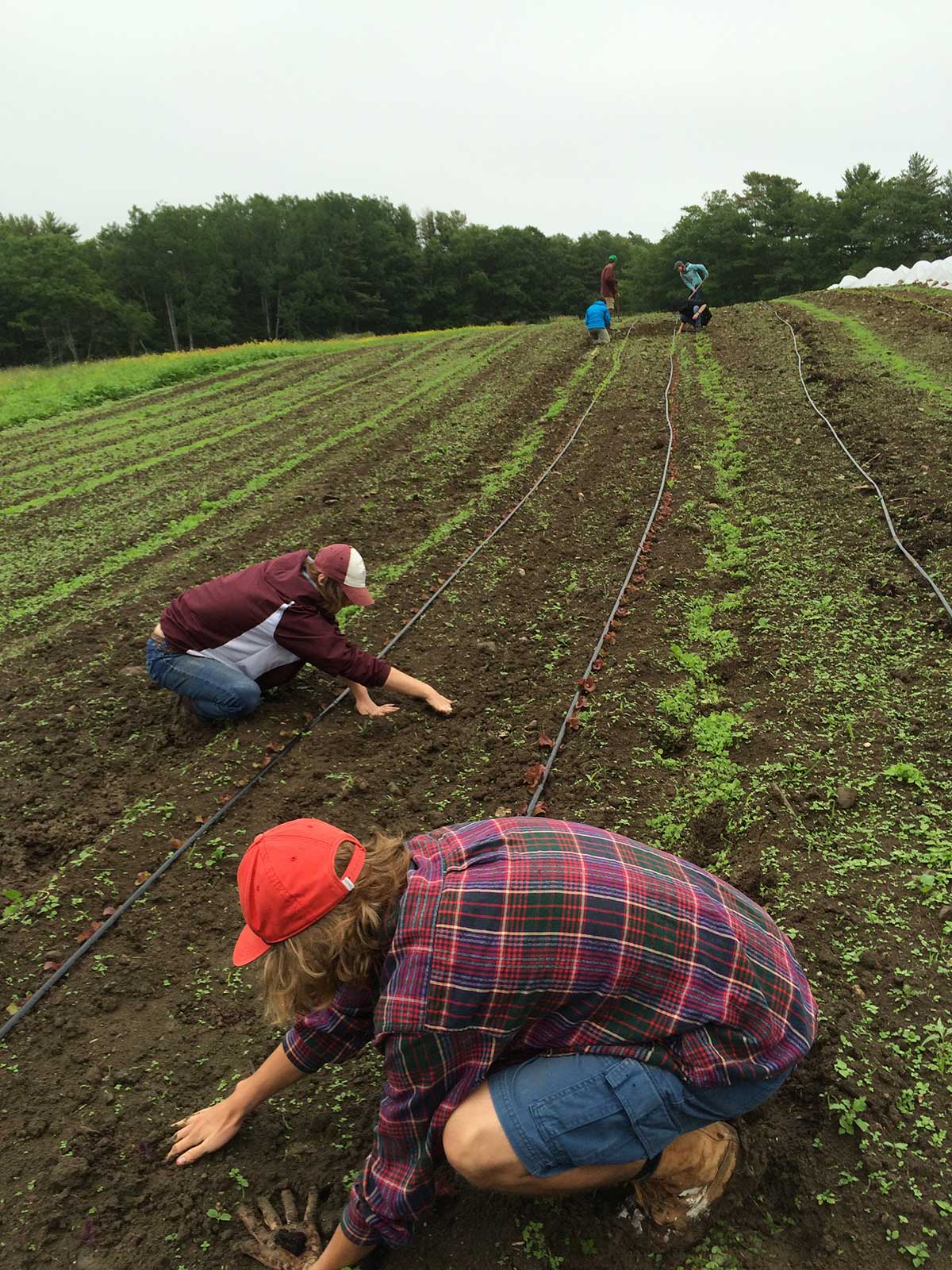
In mid-September, we began establishing winter cover crops in our open fields. This year we used a mix of oats and peas as our winter cover, which provide a number of ecosystem services. The root system holds soil in place until the spring, and the peas fix atmospheric nitrogen and make it available in the soil, The crop also produces biomass and organic matter.

This photo is a comparison of the cover crops in September and currently. We are using a new strategy this year, preparing our raised beds in September for the spring planting the following year. We then cover crop the top surface of our prepared beds to hold soil in place and suppress weeds. In the spring of 2020 we will be able to plant this ground without disturbing the soil. Cover cropping is a best management practice and is used by the majority of farmers in Maine and New England. It takes hundreds of years to produce an inch of high quality topsoil, but only one poorly managed storm event to wash it all away.