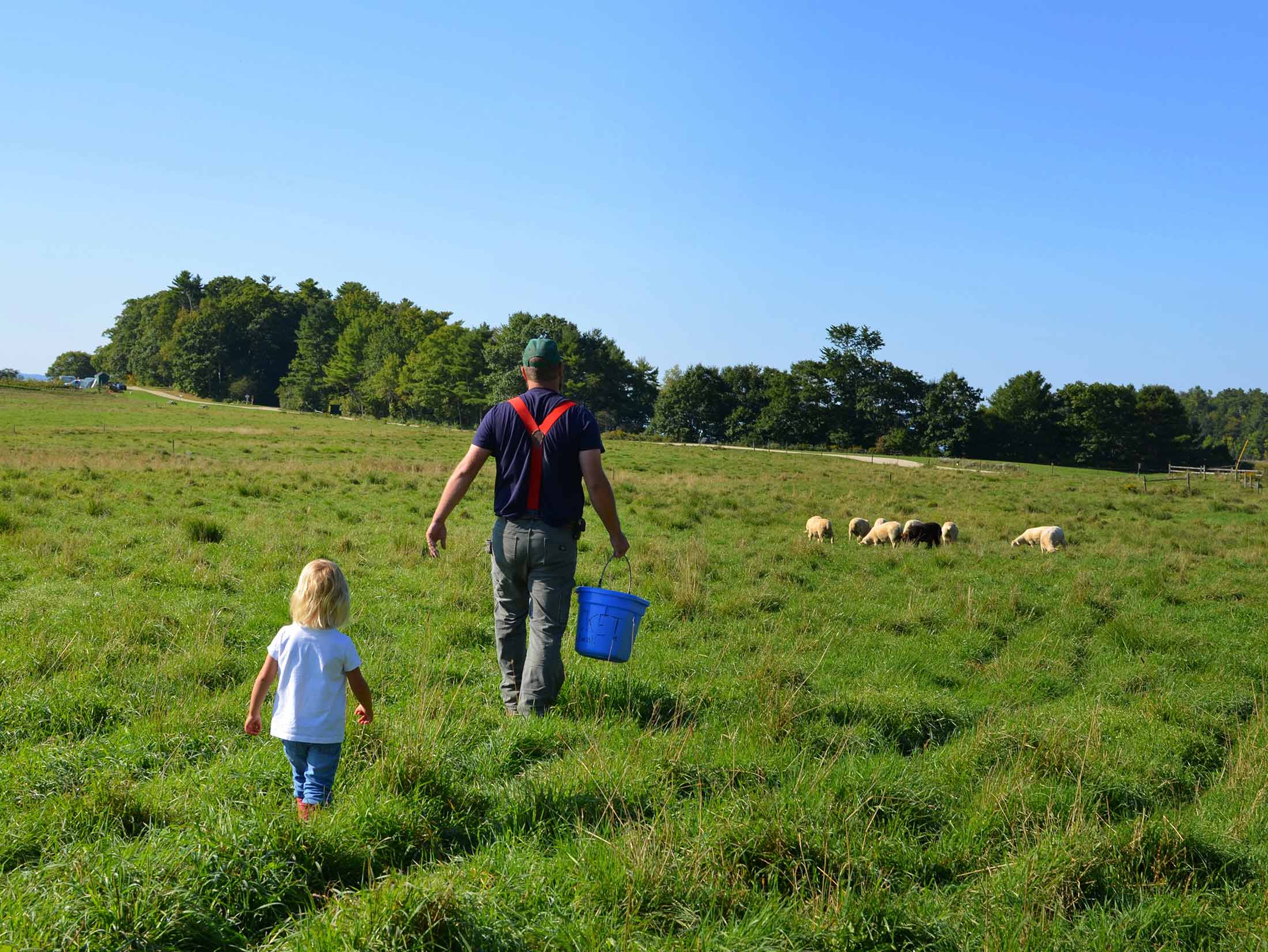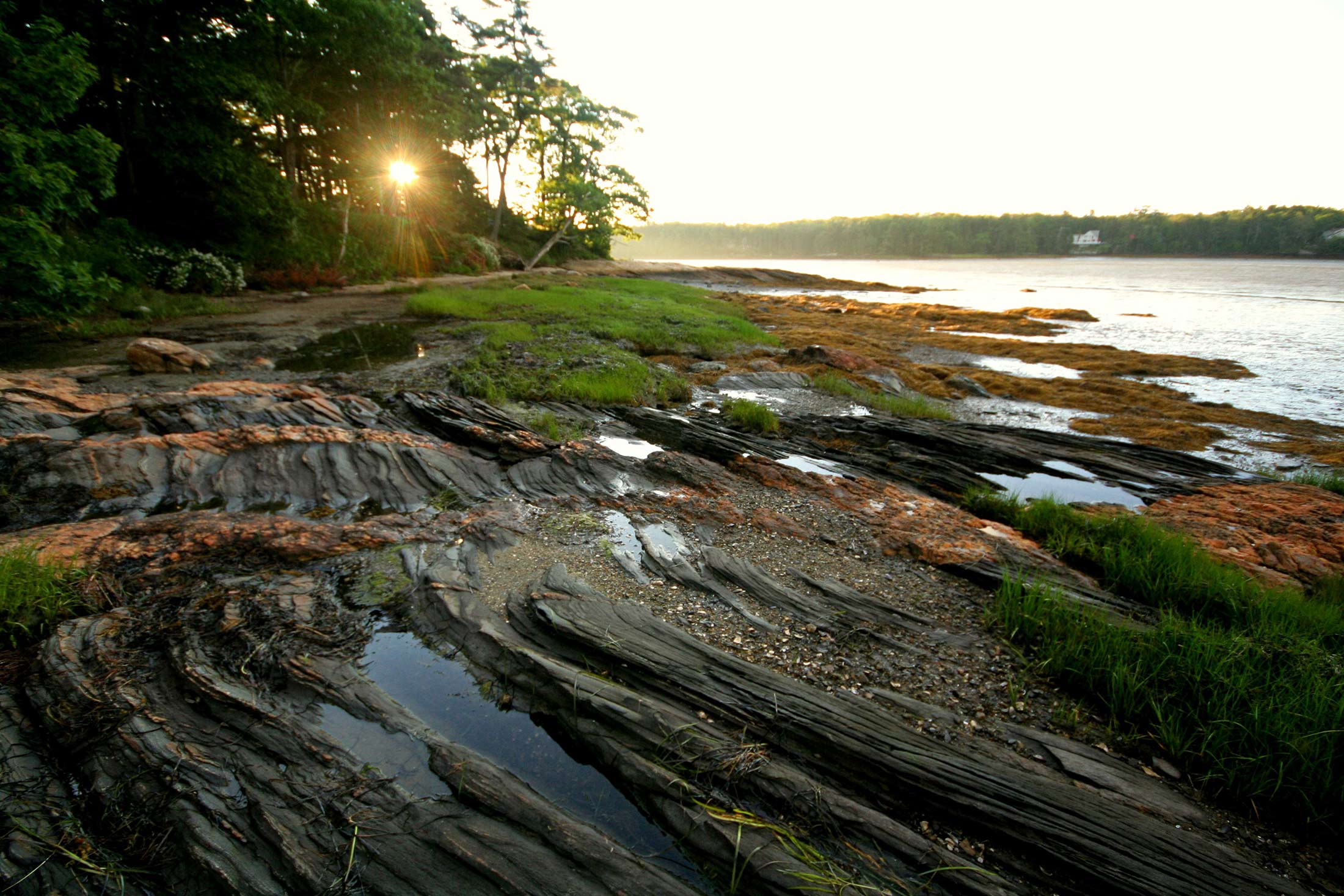
On a grazing farm, the landscape extends beyond the pasture. Along the edges of fields and fences, trees and shrubs grow alongside the grasses that feed the herd. At Wolfe’s Neck Center for Agriculture & the Environment in Freeport, ME, we’re asking whether some of that leafy growth could play a bigger role in feeding our dairy herd.
Through a 2026 Northeast Sustainable Agriculture Research and Education (SARE) Farmer Grant with the University of Vermont, our farmers are exploring whether tree and shrub foliage can provide supplemental feed for dairy cows during the summer “slump,” a period when heat and drought can slow or stop pasture growth.
For grazing farms across the Northeast, this seasonal slowdown is becoming an increasingly important challenge. Cool-season grasses struggle when temperatures rise and rainfall becomes limited, leaving farmers with less forage just when their herds still need to eat.
At Wolfe’s Neck Center, pasture availability influences everything from herd management and hay inventories to milk production. In 2025, reduced pasture growth and lower hay yields meant purchasing approximately $31,000 in additional hay and using winter feed supplies earlier than planned.
The question became: What resources are already growing on the farm that could help fill that gap?
Looking Beyond the Pasture
Our team manages 7.6 miles of forested field edges. Woody vegetation is cut back to maintain fence lines and access areas, with much of that material typically burned or mulched.
This project explores a different possibility: harvesting some of that existing biomass and putting it back into the farm’s feed system.
The idea builds on research by technical advisor Shana Hanson, who has spent years studying tree and shrub fodder as livestock feed. Her previous research has examined everything from the nutritional value and intake of leafy plant matter (“browse”) to harvesting methods and potential impacts on milk production.
Now, our team is testing what this approach could look like on a commercial dairy.
From Field Edge to Feed Trough
The project is designed around several phases, beginning with understanding what is already growing on the farm and ending with an assessment of how the practice could work for other Northeast dairy farms.
Phase 1: Planning and Preparation
May – June 2026
The project team began by reviewing existing research on leafy tree and shrub fodder and identifying species that can be safely fed to dairy cattle. Our farmers surveyed field edges, fencerows, hedgerows and other potential harvest areas.
Phase 2: Baseline Data Collection
Aug. 23 – 30, 2026
Before introducing woody browse, the team established a baseline for the participating herd.
Information about the cows’ age, genetics, lactation and reproductive status were recorded, along with body condition scores and weight estimates. They also began tracking daily milk production and bulk tank milk components, including protein, fat, lactose and milk solids.
Phase 3: Monitoring and Data Collection
Aug. 31 – Sept. 2026
This is when the project moves from the field to the dairy.
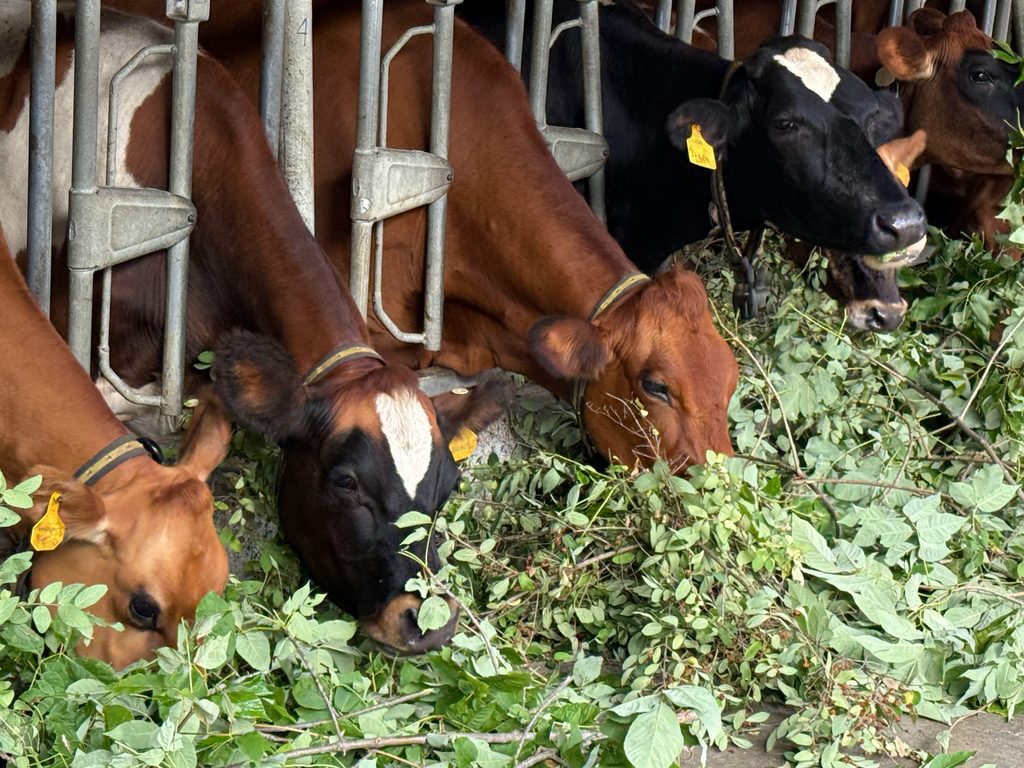
Leafy woody fodder was harvested during two feeding rotations and transported to the dairy using farm equipment. The team tested several ways of preparing and offering the material, including feeding it as-is, chipping it and mechanically separating the leaves.
For each harvest, the team tracked the amount of material collected, offered and refused, along with the labor and equipment required. The goal is to understand not only whether cows will eat the browse, but how much they consume and what it takes to make the system work.
Phase 4: Harvest and Feeding Trials
Aug. 23 – Oct. 14, 2026
Throughout the trial, the team will monitor milk production and quality. Bulk tank milk samples will be collected every 48 hours, with expanded vitamin panels conducted during the feeding rotations.
The team will also observe herd health, behavior and welfare throughout the project, creating a more complete picture of how the cows respond to the supplemental forage.
Phase 5: Reporting and Analysis
Oct. – Dec. 2026
After the feeding trials, the team will compile and analyze the harvest, feeding, labor, intake, milk and nutritional data.
The findings will help develop practical recommendations for integrating leafy woody browse into Northeast grass-based dairy systems and identify opportunities for future research.
Learning From the Land
The goal isn’t simply to determine whether cows will eat tree leaves. It’s to understand whether woody browse could become a practical, climate-resilient forage option for Northeast dairy farms facing increasingly challenging summer conditions.
Using existing resources could also offer other benefits. Redirecting some maintenance activities toward forage harvest could reduce pressure on pastures during dry periods, help maintain vegetative cover and reduce reliance on purchased feed.
Just as importantly, the project is designed to share what we learn and help build a more resilient food system. Wolfe’s Neck Center will make project findings available through the New England Grazing Network, SARE and other farmer-focused resources, along with a hands-on workshop focused on woody species identification, environmentally conscious harvesting and planning.
For farmers navigating changing weather and increasingly unpredictable forage availability, resilience can sometimes mean looking at familiar landscapes in a new way.